Original Book Website
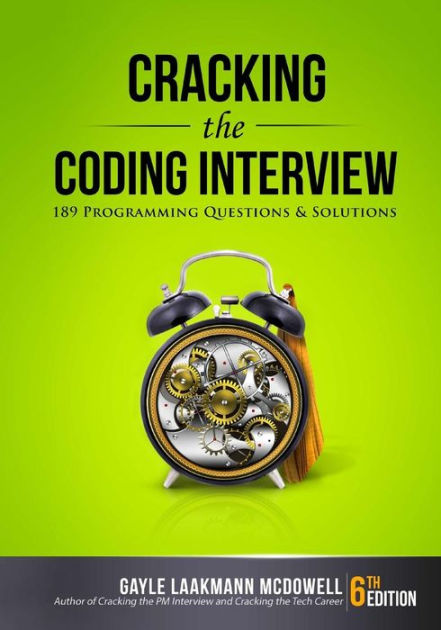
Cracking the Coding Interview by Gayle Laakmann McDowell is a popular resource for software engineers preparing for technical interviews. This book provides in-depth explanations, coding problems, and solutions, along with valuable insights into the interview process at major tech companies. It is designed to help candidates understand the technical skills, problem-solving techniques, and strategies necessary to succeed in coding interviews.
Key Sections and Concepts: The Interview Process: McDowell begins by demystifying the tech interview process, explaining what companies like Google, Facebook, and Amazon look for in candidates. Covers different types of interviews (phone screens, on-site interviews, behavioral interviews, and coding interviews) and what to expect from each. Offers advice on how to handle non-technical questions, communicate effectively, and demonstrate problem-solving skills during interviews. Technical Foundations and Key Programming Concepts: Before diving into the coding problems, the book provides a refresher on essential computer science concepts that are frequently tested in interviews. Topics include data structures (arrays, linked lists, stacks, queues, trees, graphs, hash tables), algorithms (sorting, searching, recursion), and time/space complexity. McDowell explains Big-O notation and how to analyze the efficiency of algorithms, which is a key skill in optimizing code and performing well in technical interviews. Problem-Solving Techniques: McDowell presents problem-solving strategies to help candidates approach and break down complex coding problems. Techniques include using examples, simplifying problems, breaking problems into smaller components, and practicing “brute-force” solutions before optimizing them. Encourages practicing common coding patterns, understanding problem requirements, and testing solutions with different inputs. 189 Programming Questions and Solutions: The core of the book consists of 189 coding questions covering various topics and difficulty levels, complete with detailed solutions and explanations. Questions are categorized by topics such as: Arrays and Strings: Basics like string manipulation, array rotations, and character counts. Linked Lists: Merging, reversing, finding cycles, and removing duplicates. Stacks and Queues: Implementing stacks/queues, using them in algorithms, and solving problems like balanced parentheses. Trees and Graphs: Traversals, finding nodes, balancing trees, and understanding graph-based problems. Bit Manipulation: Working with binary representation, bit shifting, and XOR operations. Math and Logic Puzzles: Number theory, combinatorial problems, and logic-based challenges. Sorting and Searching: Implementing algorithms like quicksort, mergesort, binary search, and solving related problems. Dynamic Programming and Recursion: Using memoization, solving classic problems like Fibonacci, and exploring complex recursive solutions. Each problem includes hints, thorough explanations of the solution, and alternative solutions to encourage deeper understanding. Behavioral Questions and Soft Skills: In addition to technical questions, the book provides guidance on handling behavioral questions, which are often overlooked in technical interview prep. It covers common behavioral interview questions, such as discussing past projects, handling challenges, and explaining career goals. McDowell emphasizes the importance of demonstrating a collaborative attitude, adaptability, and passion for technology, which can impact an interviewer’s impression. Additional Interview Tips: The book shares tips on preparing a strong resume and provides sample resume templates to highlight key skills and achievements. Offers advice on handling unexpected interview scenarios, such as not knowing the answer to a question, and how to ask clarifying questions to better understand the problem. Emphasizes the importance of practicing mock interviews, either with a peer or online, to build confidence and get used to thinking out loud. Understanding the Interviewer’s Perspective: McDowell offers insights into what interviewers look for during technical interviews and how they evaluate candidates based on problem-solving approaches, code quality, and communication skills. She explains that interviewers value clarity, logical thinking, and the ability to communicate and discuss the code as it is being written. Conclusion: Cracking the Coding Interview is a comprehensive resource for anyone preparing for software engineering interviews, particularly for roles at top tech companies. It provides an in-depth look at technical and behavioral interview strategies, as well as a wealth of coding problems that cover key data structures and algorithms. By focusing on problem-solving skills, technical foundations, and effective communication, this book equips candidates with the tools they need to tackle challenging interview questions with confidence.